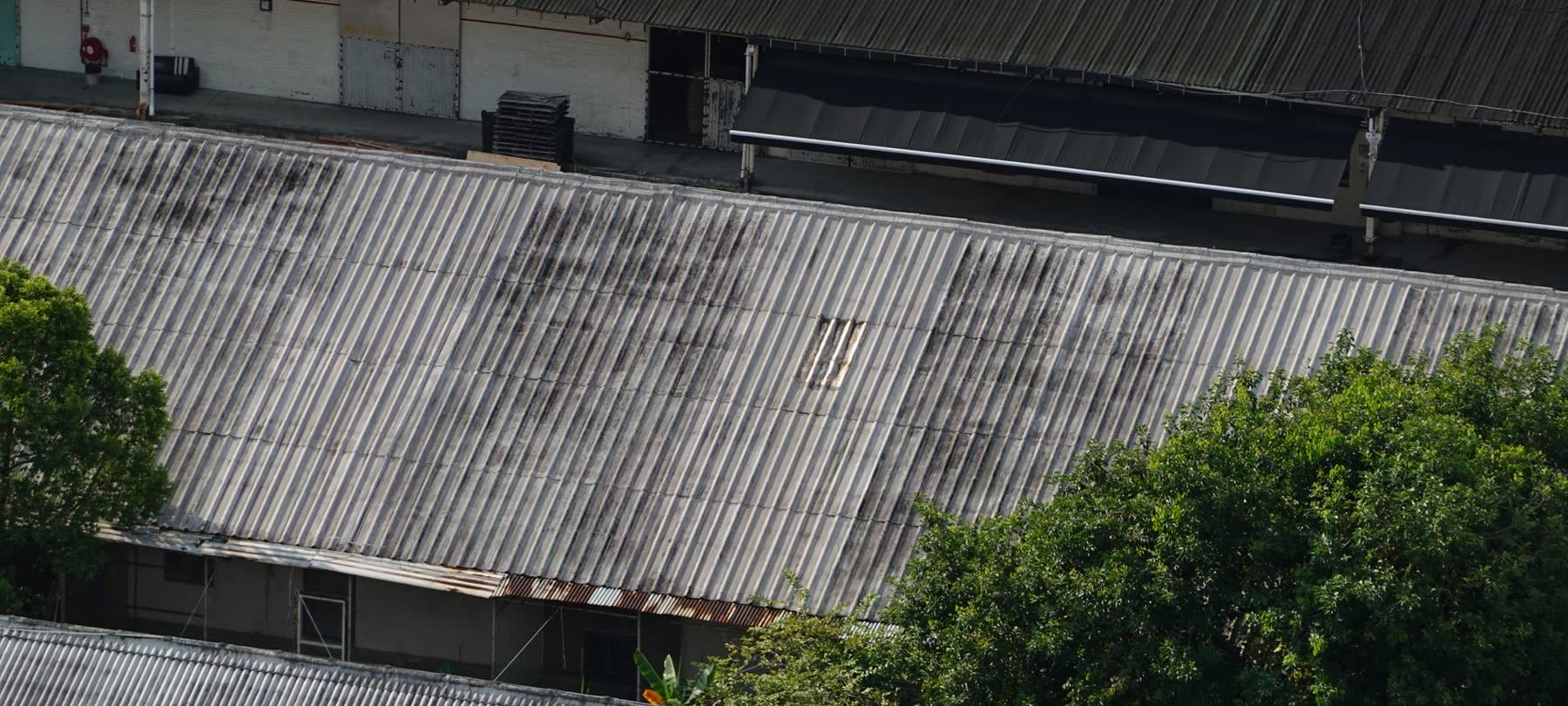
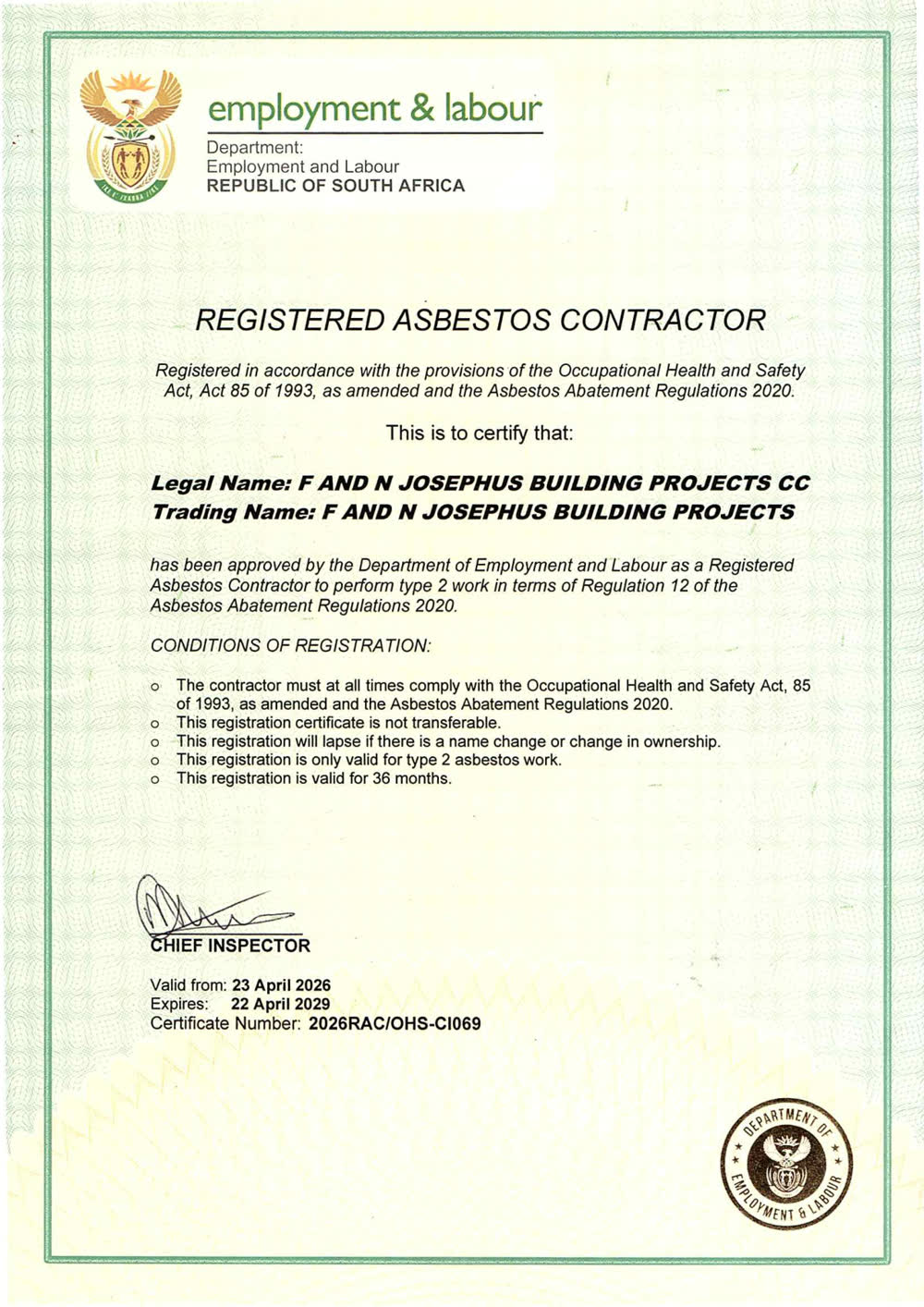
FN Building Projects is a registered asbestos contractor in Cape Town, registration 2026RAC/OHS-CI069 (Type 2). Type 2 covers work such as the removal of asbestos cement products and asbestos insulating board, which is what most Cape Town homes and older commercial buildings actually have: roof sheets, ceilings, gutters, downpipes and boundary panels.
The first question is not how quickly we can get it off. It is whether it should come off at all.
Removal is not always the right answer
Asbestos cement that is intact, in good condition, sealed or painted, and not going to be disturbed is often better left in place and monitored. Taking it down creates a risk that was not there while it sat undisturbed.
Removal is the right call when the material is damaged or deteriorating, when building work is going to disturb it, or when the structure is coming down anyway. If your situation is the first kind, we will tell you so, even though it means no removal work for us.
What we handle
- Asbestos cement roof sheets on houses, garages, outbuildings and commercial roofs
- Asbestos insulating board, including ceilings and panelling
- Gutters, downpipes, fascias and boundary panels in asbestos cement
- Removal ahead of a renovation or demolition, sequenced so the rest of the build is not held up
Some asbestos work needs a different level of appointment, additional specialist input, or an Approved Inspection Authority. Where a job falls outside our registration, we say so before it starts rather than taking the work and finding out afterwards.
How the job runs
- Identification. You cannot tell asbestos by looking. Suspect material is sampled and analysed
- Assessment and planning. An inventory, a risk assessment and a plan of work, prepared before anyone starts rather than after
- Notification. The required notification is lodged before work begins
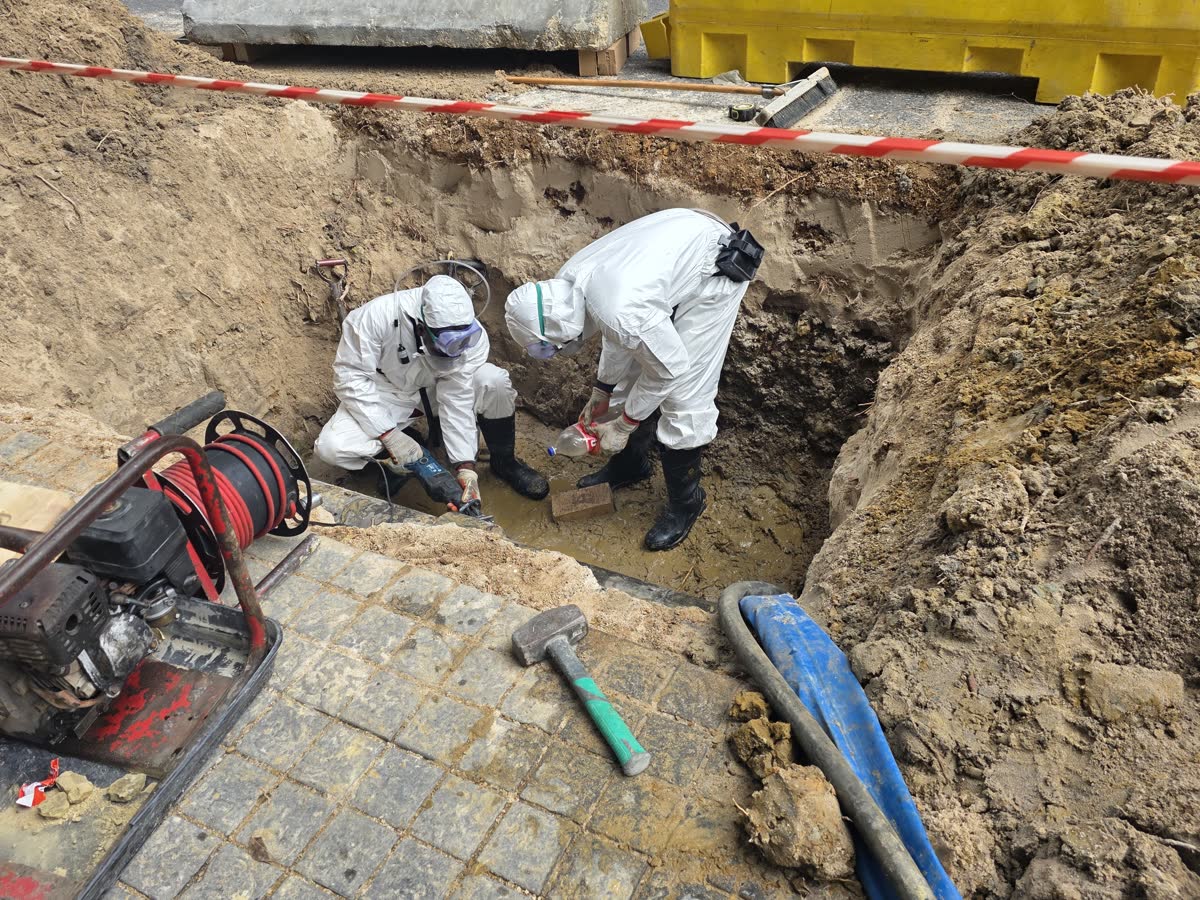
- Controlled removal. Trained, supervised workers with medical surveillance. Material is kept wet so it does not release fibres, and sheets come off whole wherever possible. Nothing is broken for convenience
- Containment and decontamination. Occupants and neighbouring areas are protected, and nothing leaves site on clothing or tools
- Waste handling. Waste is separated, contained, wrapped, labelled, transported and disposed of through the correct route. It does not go in with ordinary rubble
- Clearance and documentation. Clearance where the regulations require it, and the documentation handed to you at the end
Why it costs more than ordinary demolition
Ordinary demolition is labour, tools, rubble and transport. Asbestos work adds sampling, notification, trained and supervised labour, medical surveillance, containment, controlled disposal and clearance documentation. None of that is optional, and none of it can be rushed.
If one quote comes back at a fraction of the others, the useful question is which of those steps has been left out. Usually it is the disposal. We explain the reasoning in full in why asbestos removal is so expensive and dangerous.
If you think you have asbestos
Do not drill it, cut it, sand it, pressure-wash it, or pull at it to see what is underneath. Do not sweep up broken pieces. Leave it alone, keep people away from any damaged material, and photograph it from a safe distance if you need to explain the situation.
Then note where it is, whether it looks damaged, and whether any building work is planned nearby. Those three things are enough for us to tell you what the next step should be.
What you get from us
- A free site visit and an honest answer on whether removal is needed at all
- A fixed itemised quote, back within 3 to 5 working days, showing what each part of the process costs
- Work performed under our Type 2 registration, or a clear statement that the job needs someone else
- The documentation at the end, not a verbal assurance that it was all handled
If the asbestos is coming off ahead of other work, we can carry straight on into the demolition or the build, so you are dealing with one accountable team rather than coordinating three.